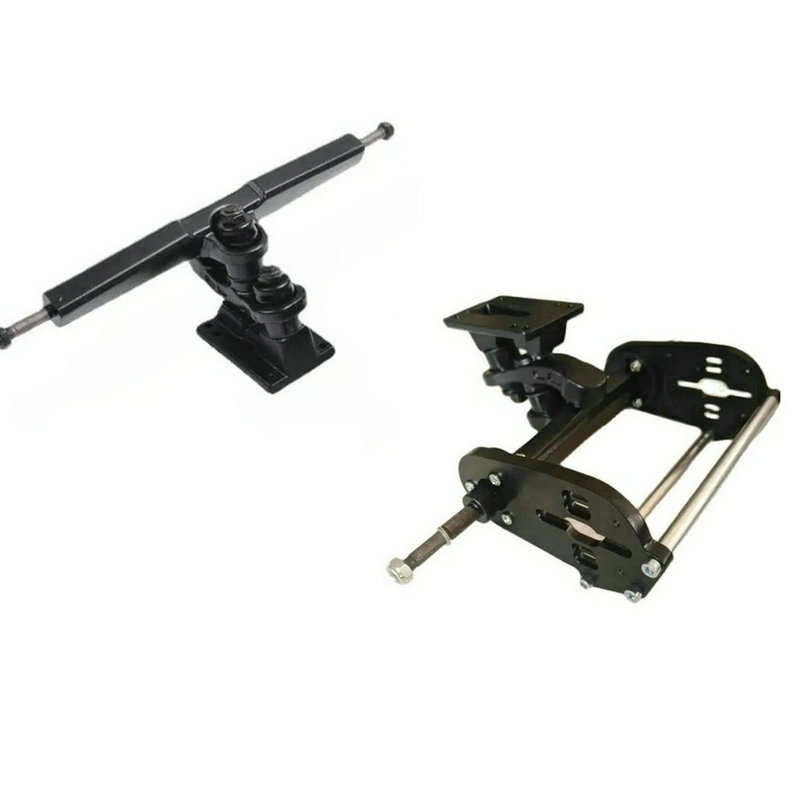










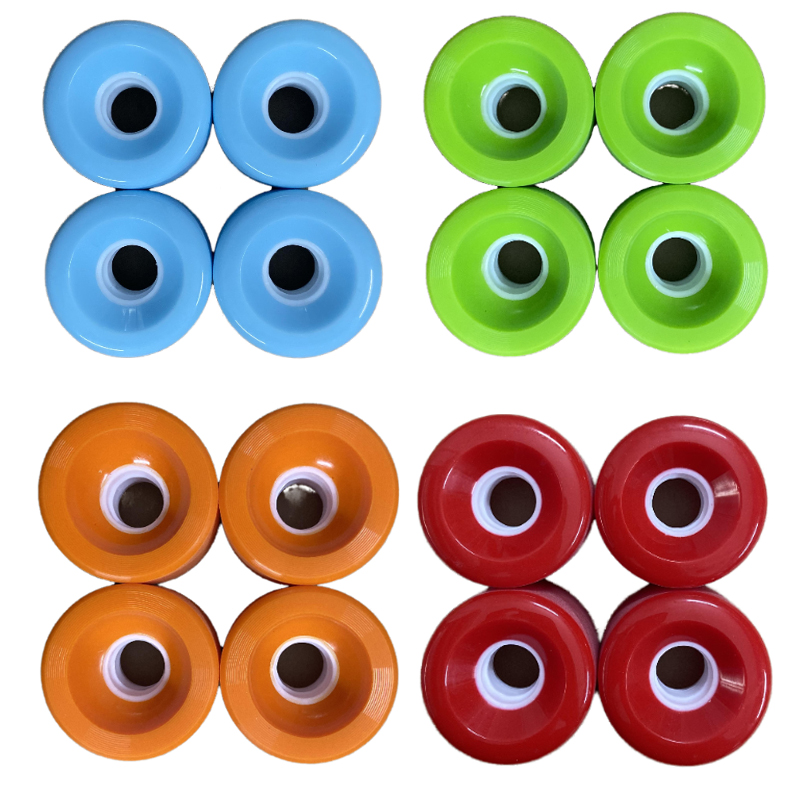
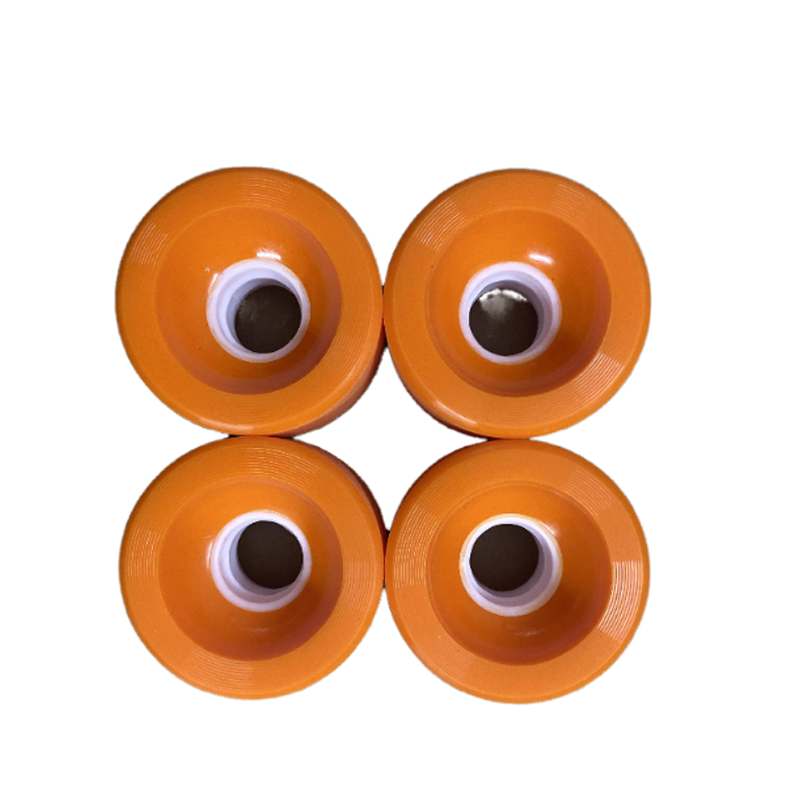
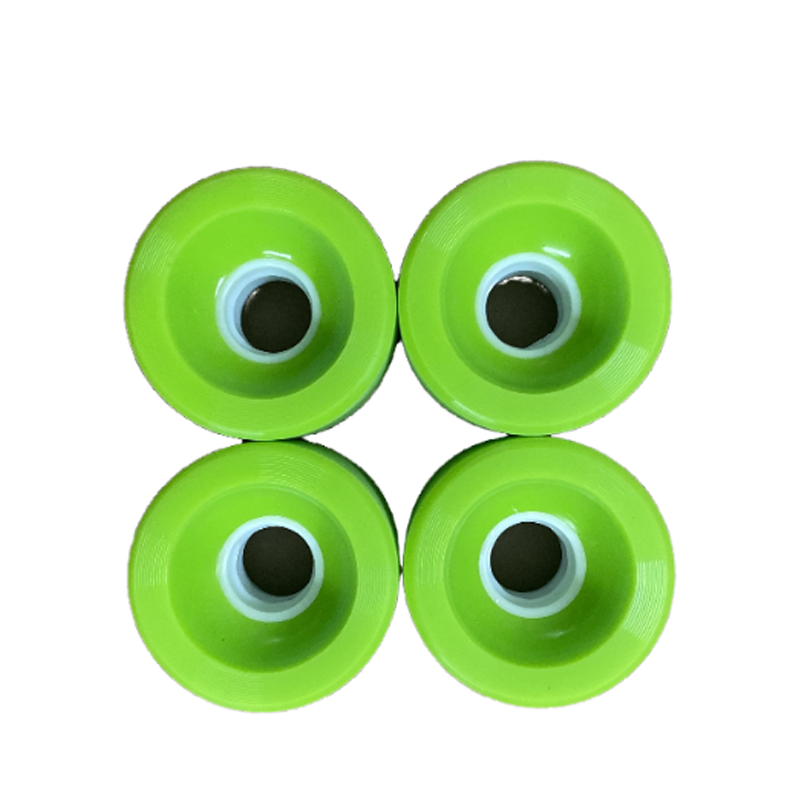
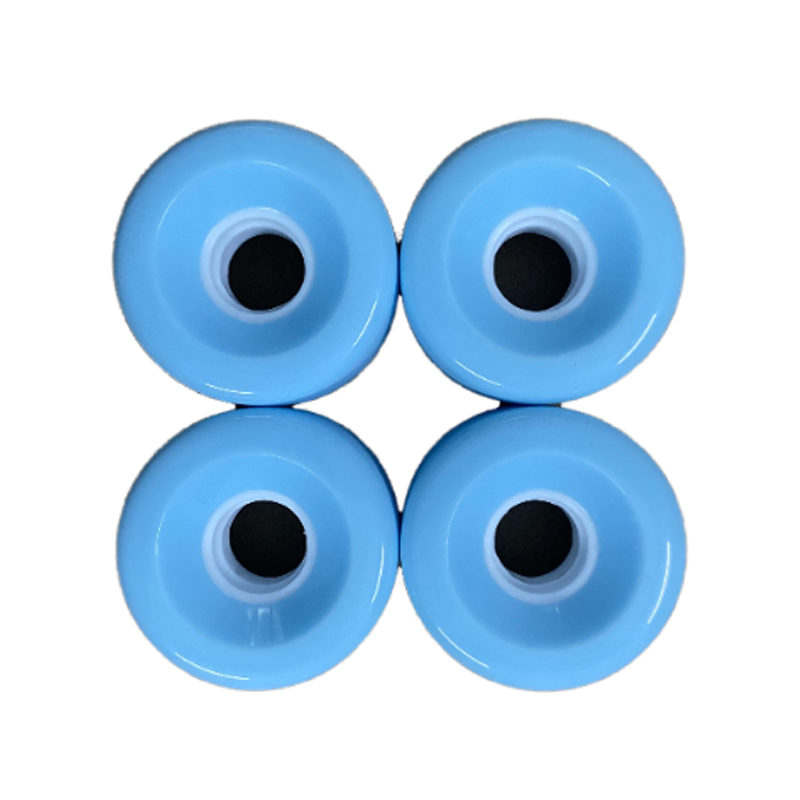
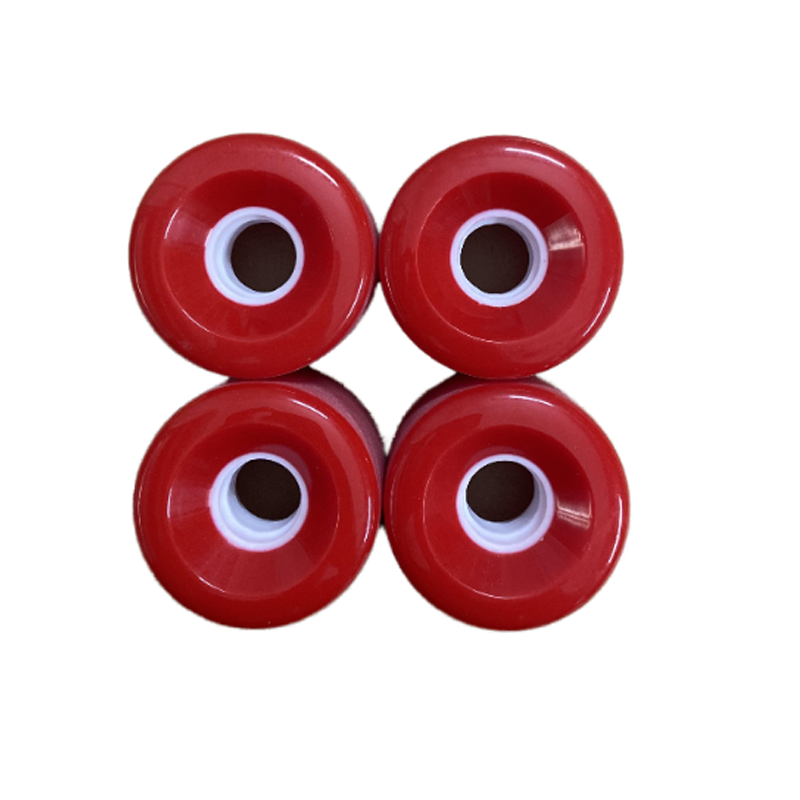
The Best Surfskate Wheels 82A 65MM Soft Wheels Skateboard 78A Street Surf Skate Wheel Carving Slalom Core


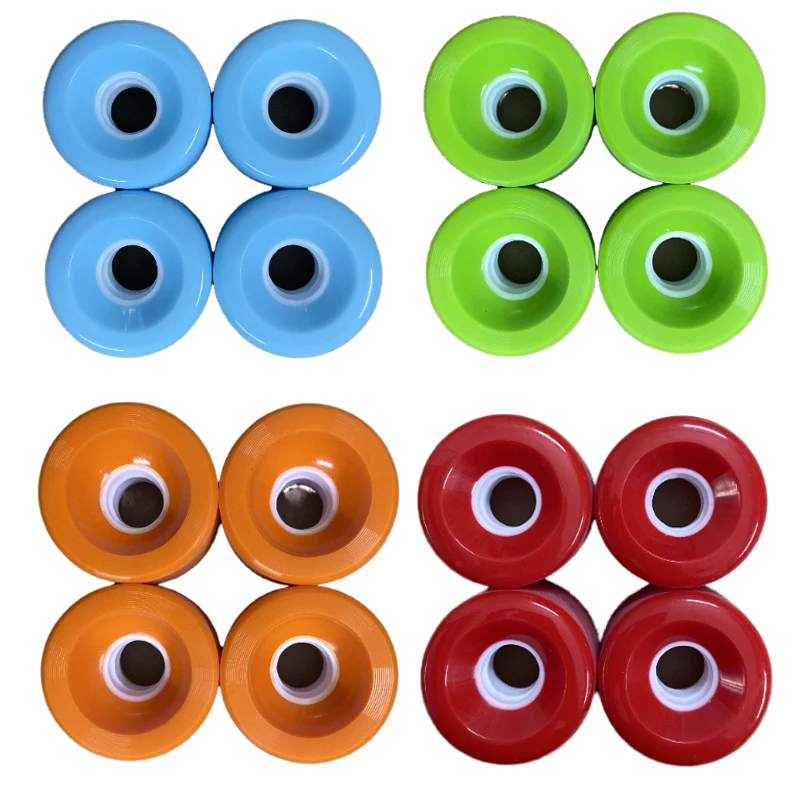
What are the best surfskate wheels for going to the park? Which wheels to slide? And which wheels should I mount to use my surfskate on bumpy roads? There are dozens and dozens of cruiser, surfskate and longboard wheels to choose from and knowing their characteristics is essential in order not to make a mistake. Wheels in the surfskate are too often underestimated, yet one wrong wheel can easily ruin even the best of settings ... a bit like the fins on a surfboard! A risky comparison? For nothing.
The wheels in the surfskate are just like the fins in the surf. They are convinced by Smuuthstar where he even talks about sizes S, M, L and not millimeters for the wheels, just like for the surf fins. After all, the parallelism is quickly made: the wheels are the connecting element between your skate and the ground, and like the fins in the case of the surfboard, they produce friction.
The optimal wheelset is the one that offers you the right compromise between grip and smoothness based on the terrain you are on and the feeling you want.
That said it seems easy!
In fact, there are many things to consider in order to achieve this "fair compromise". Let's start to understand something by taking into consideration the size factor which is absolutely decisive, even if it is not the only one ..
Wheels: size matters!
When we talk about the size of the surfskate wheels we are referring to two measures which are the diameter of the wheels and the width of the wheels (i.e. surface in contact with the ground). Most surfskate wheels are between 65mm and 70mm in diameter, although there are also smaller and larger ones.
Diameter and width together determine the smoothness of the wheels and their tightness .
Larger wheels offer more grip, smaller wheels offer less grip and tend to slide off (slip) more than larger wheels which instead offer greater contact surface with the ground and therefore greater grip. Conversely, smaller wheels offer greater smoothness and a more responsive feel.
This is why if you are looking for wheels to slide more easily you should try smaller and narrower wheels .
Conversely , if you are looking for grip for example to deal with fast pumping on roads that are not perfectly smooth, you should try bigger wheels .
Wheels and rider weight
Some surfskate manufacturers push the parallelism with the fins to the point of relating the size of the wheels to the weight of the rider , rather than other factors.
The reason is that the heavier the rider is, the larger and wider the wheels will have to be to offer him the right grip in critical corners and prevent the wheels from slipping off involuntarily.
So small and light riders, like children for example, will need much smaller wheels than big and heavy adults.
Wheels and bottom
Driving on bumpy roads is not the same as using the surfskate on the smooth floor of a skatepark.
The rougher and more bumpy the bottom the more grip you will need and therefore the wheels should be bigger and wider.
Very large wheels tend to offer too much grip on the smooth floor of many skateparks.
At this point, however, we must necessarily introduce a further element that is fundamental when we are talking about different terrains and that is the hardness of the wheels.
Wheel hardness
Almost all surfskate wheels in circulation are now made of urethane: a very elastic plastic material, with excellent rebound and good abrasion resistance.
Although all wheels are made of polyurethane, not all are the same. Different compounds give different results in terms of adhesion to surfaces, smoothness, rebound, durability and hardness.
Hardness is actually the only one of these factors that is commonly indicated on the wheels on the market, even if the other parameters are also very important ... the rebound for example which indicates how much force is needed to push the wheel forward.
The rebound is determined by the material of the wheel: high quality materials generally have a high rebound. Some manufacturers indicate this type of wheels with the abbreviation SHR urethane (Super High Rebound) ... but not all. What is certain is that very cheap wheels are unlikely to have a good rebound
To indicate the hardness of the skate wheels on generally use the scale A followed by a number. In the surfskate wheels between 78A and 85A are generally used, while in the skate street or park wheels from 95A up to 101A.
Just to clarify the doubts regarding the hardness of the skateboard wheel: the lower the number indicated on the wheel (durometer), the more adherent the skate wheel will be and will have greater grip with the ground. The higher the number the harder and faster the wheel will be, and suitable for smooth surfaces.
Let's do a couple of examples!
Hardness 78A is the most used on surfskates and very soft when compared to traditional skateboard wheels. The soft wheels are ideal for road use.
82A hardness , suitable for skateparks, ramps or smooth surfaces such as wood
関連製品